Tackling the growing rates of violence affecting young people and anti-social behaviour
In the year ending March 2024, children were involved in around 3,200 proven knife or offensive weapon offences, a fall of 6% from the previous year. Despite the decrease, the figure is still 20% greater than 10 years ago. The reoffending rate increased for the second consecutive year and is currently at around 22.2% for cautions, and 65.9% for custodial sentences. In a survey of 10,000 children, 52% said that fear of violence led them to change their behaviour or has impacted their wellbeing. Of those surveyed, 90% of children who perpetrated violence were offered no support or training to control their behaviour. Over the last decade, spending on services for young people in England has halved – down by more than half a billion pounds since 2012/13 in real terms.
In November 2023, we were happy to have been invited to join a roundtable, jointly hosted by Her Honour Judge Sarah Munro KC (Senior Circuit Judge at The Old Bailey) and Joseph Lyons (West Ham United Foundation CEO), focused on “Tackling the Growing Rates of Violence Affecting Young People and Anti-Social Behaviour”. At that roundtable, which took place at the Old Bailey, numerous leaders from across sectors met to talk about the issue, make connections, and discuss what some of the solutions may be. Since then, there have been separate roundtables for the public, VCSE, and private sectors. At each one, the issue was discussed, experiences were shared, and consideration to the solutions was given. From there, our team took on the role of exploring the potential solutions a bit deeper, in a series of consultations with 12 professionals from different sectors who had each attended one of the roundtable events.
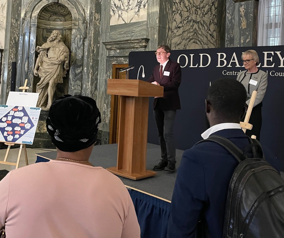
Nick (CORC Programme Manager) presented our findings at the Collective Gathering of the Round Table Series in November 2025, in the Old Bailey Grand Hall.
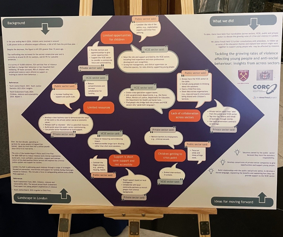
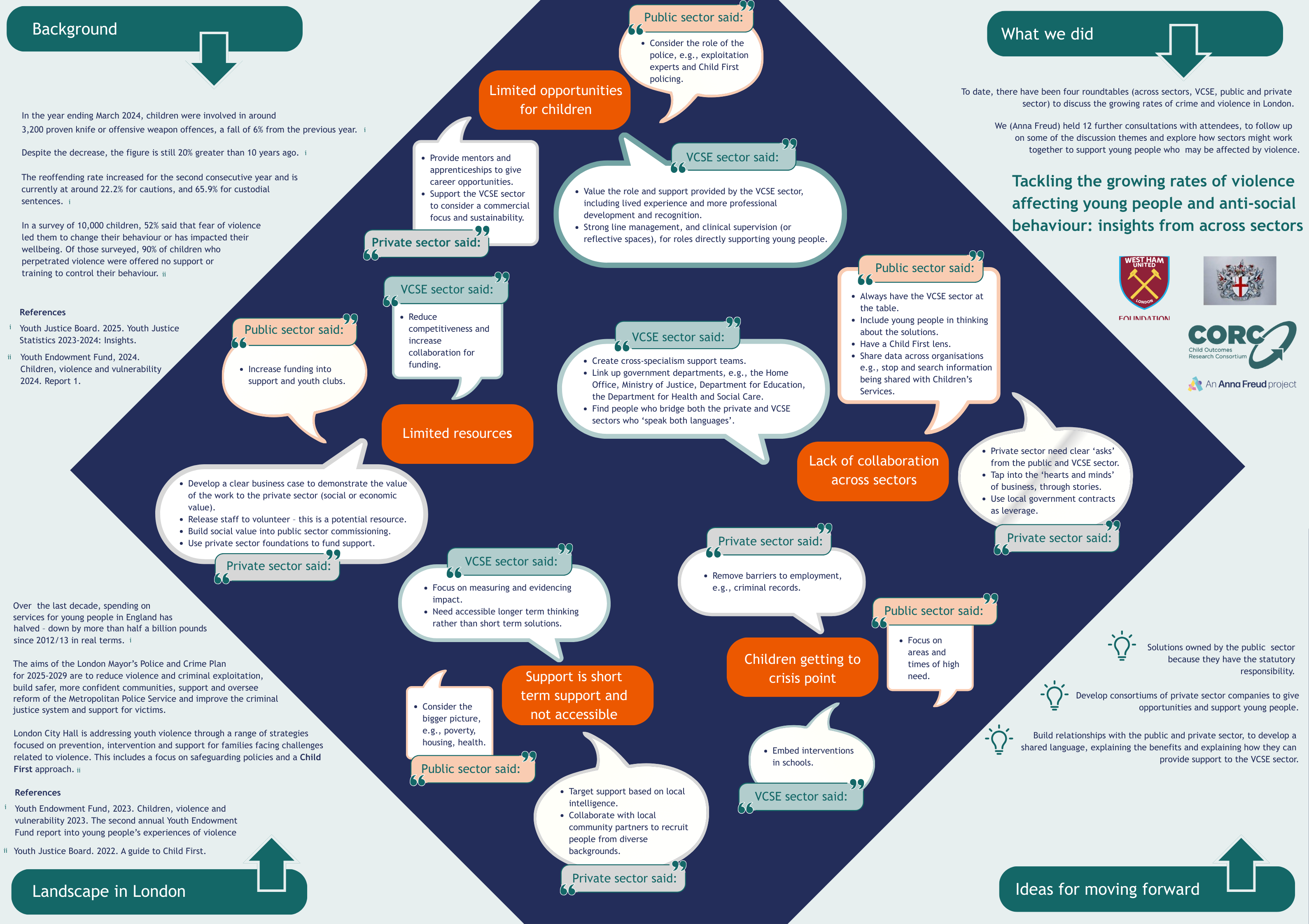
We grouped our findings into five main issues: limited opportunities for children, limited resources, lack of collaboration across sectors, support is short term and not accessible, and children getting to crisis point.
Participants from across all sectors identified that the range of opportunities were quite limited, and in some cases not sufficiently tailored to the needs and preferences of the young people they aim to support. A common theme was the lack of support for young people to access guidance and mentoring that would support them into education and work opportunities. The private sector participants believed this was an area where they could contribute.
The support available was described as often being quite short term, and participants from the VCSE sector expressed some frustration with funding streams often being time limited. This means that more extended support, which is often needed by young people, was difficult to provide. This was compounded by a broader lack of resource for preventative support, potentially because this impact of preventative work is, by its very nature, more difficult to evidence impact for.
Limited resource, and limited availability of preventative support and early intervention means that many young people are reaching a point of crisis before support is provided.
Participants welcomed the opportunity to collaborate with professionals from different sectors, and valued the approach of this work as a way of building understanding of the challenges and opportunities of working across sectors, and developing thinking about how sectors must work together to tackle this issue. Developing deeper understanding, and improving communication between sectors was universally acknowledged as a key development for moving things forward.
Our recommendations for moving forward were: 1) for the public sector to own the solutions, because they have statutory responsibility and are in a position of oversight, 2) develop consortiums of private sector companies to give opportunities to and support children, 3) build relationships between the public and private sector, to develop a shared language, explaining the benefits and explaining how they can provide support to the VCSE sector.
Please see our poster here.
The roundtables have been a brilliant opportunity to meet people from across sectors and build the conversations about how we can collectively work on reducing youth violence across London. There’s more to do and we hope this is the start of the collaborative work to improve the lives of children and young people, and communities.
Dr Jenna Jacob, CORC Research Lead