Learning from our evaluation of the West Ham United Foundation PCN mentoring programme
We recently completed our two year evaluation of the West Ham United Foundation PCN mentoring programme. The programme links 12–18 year olds with a mentor for up to six months (usually an hour a week, or every other week). Referrals were received via GPs, and sessions took place mainly in GP practices, and where possible, in schools and community venues across Newham and Barking & Dagenham. It originally started as a knife crime prevention pilot, and then grew into a broader, community-based wellbeing mentoring offer.
What we did
Our evaluation drew on administrative outcomes data (including SWEMWBS wellbeing and SRS resilience measures) and interviews with young people and staff, including mentors. Qualitatively described improvements were clearer than change reported on standard measures in a small dataset. From the qualitative interviews, we explored…
What helped young people
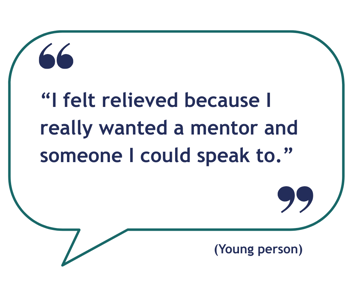
1) Time, attention and a predictable relationship. Staff emphasised that GP appointments rarely allow the time needed to explore the context behind behaviour and wellbeing difficulties. The mentoring programme created protected time in which young people could talk, be listened to, and track goal progress.
2) External support from someone who isn’t school or family. Young people and staff described how mentors being outside of their usual networks (school and family) supported openness and disclosure, and reduced concerns about being ‘seen’ accessing support.
3) Flexibility without losing structure. Participants repeatedly described the flexibility of the programme as a strength. Goals were often focused on concrete help with everyday goals (school, routines, relationships and future plans). Goal setting was motivating, but worked best when it was collaborative.
4) Practical help as a route into wider wellbeing. Young people described improvements in school attendance, focus and attainment, alongside mentor support with exam revision, education choices and job pathways. This suggests that addressing functional needs can be both an outcome in its own right and a mechanism for improved mental health and wellbeing.
-
Relational, non-clinical support can support wellbeing: young people described reduced anxiety and anger, increased confidence, handling emotions better, and better help-seeking when support felt flexible, consistent and non-judgemental.
-
Access pathways matter: referral via GP practices enabled timely engagement and appeared to reach groups who are less likely to access other sources of support (for example, boys).
-
Practicalities determine the value of the programme: room availability, clear points of contact, and strong communication loops between mentors and the GP practices shaped whether implementation was smooth or more challenging.
-
Language really matters: wording that is associated with violence can put families off. Clear, sensitive framing improved engagement and expectation-setting.
-
Brand or identity can improve engagement: we found that the association with West Ham United FC made the programme more attractive to young people, and they were able to access opportunities that they would not otherwise have been able to.
We reported some findings at a mid-way point in the evaluation, and it was great to see that some of our suggestions had already been taken on board in the second year. For example, some interview comments highlighted how easily trust can be damaged through small interactional details, such as taking notes on a laptop in sessions. In the second year of the evaluation, mentors described minimising the use of the laptop and being explicit about why notes were being taken.
Overall, our findings suggest that primary care can be an effective front door into trusted, timely community-based support for young people, particularly where social adversity and emerging mental health and wellbeing needs overlap. This aligns with learning from several of our recent evaluations (e.g., London Vanguards, Humber and North Yorkshire children and young people trauma informed care programme and Advantage Mentoring), which similarly point to the value of accessible early support delivered through strong partnership working, underpinned by good practitioner-young person relationships.
Some key questions arose from our evaluation that may be used in the development of support offers:
- Is the offer clear and consistently explained?
- Are thresholds proportionate to need?
- Is there continuity (named worker, predictable, planned endings)?
- Do any partner services have the relevant things in place to deliver relational work (space, capacity and supervision)?
- And are we measuring what matters (choice points relate to engagement, goals, and experience as well as symptoms and wellbeing) and using it to close communication loops with young people and between services?
Taken together, these questions are a way of staying focused on what young people told us makes support work: time, trust, flexibility and practical help delivered in the right place, at the right moment. As primary care and partners consider how to strengthen early help, we hope the learning from this evaluation supports thoughtful design and implementation of relational, community-based offers that complement clinical pathways and reach those who might otherwise be missed.
Thank you again to everyone who took part in, and supported, our evaluation.
See our full report here:
West Ham United Foundation PCN mentoring programme evaluation