Unpacking the digital impact on young minds – keynote highlights from BACP Children Young People and Families conference.
This year’s Children, Young People and Families conference by the British Association for Counselling and Psychotherapy (BACP) focussed on: Unpacking the digital impact on young minds: Likes, lives and layers. A topic that is very much on people’s radar.
Our Communications and Marketing Officer Chrissy Norwich, also a counsellor working with young people and parents, highlights takeaways from the keynote speakers at the event, which include some useful data from young people.
Keynote speaker: Shaun Polley is the Chief Executive Officer of Croydon Drop-In, a long-established young people’s mental health and wellbeing charity supporting thousands of children and families each year. He chairs BACP’s UK Expert Reference Group on school counselling provision and has contributed to national guidance and policy on safeguarding, missing and exploited children, digital harm, and youth mental health. His work brings together clinical insight, safeguarding expertise, and a deep understanding of the digital worlds shaping children’s lives today.
The title of his talk was:
The digital maze: how screens shape risk, resilience and the realities young people don’t tell us
Online/offline is one continuous experience, and in both domains development of their identity and self-regulation are of equal importance, so the same contextual safeguarding framework should be applied. We shouldn’t remove them from digital life and make young people feel socially isolated, just help them navigate it.
Adults are playing catch up, digital moves fast. Young people need to understand the maze they are navigating. And yet adults often don’t often understand the territory.
Shaun highlighted two types of digital harm:
-
Safeguarding ham: grooming, child sexual abuse, online sexual abuse, radicalisation and extremism [specialist, multi-agency escalations & responses]
-
Environmental & systemic harms: algorithms, comparison, 24/7 dynamics, cyberbullying [therapeutic responses, preventative work & resilience building].
Asking about the content and what young people are consuming is key.
Research was shared highlighting that:
-
76% of young people feel connected through online communities
-
68% of young people received support during tough times online
-
63% of young people felt more confident in healthy communities online
-
63% of young people said is had a positive impact on relationships
However, risk and safety live in this same space.
The Harm Reality
-
68% of young people saw harmful of disturbing content
-
42% of young people viewed racist/discriminatory content
-
40% of young people exposed to bullying content
-
35% of young people seen suicide/self harm content
-
28% of young people exposed to pro-eating disorder content
The Protective Reality
-
82% of young people agreed that being online helps young people their age be happy
-
93% of young people agreed they like using online devices
-
90% like what they do online
-
57% of teenagers have made a new friend online
A paradox to hold and be considered. It’s not the quantity of screen time, but the quality of content. Encouraging and creating awareness around emphatic peer support, positive interactions (not comparison) and save havens for marginalised youth.
Creating awareness with young people that algorithms are picking up what is being paused on (briefly) in their feed. So each young person’s feed will be a reflection of this. When a parent or therapist can explore what a young person is seeing in their feed, you may well have a key to what their low mood or mental ill health is about.
So rather than asking “how many hours are they online?”, it’s better to ask “What is digital life doing FOR them, not TO them?”. Getting a window into their life and mind.
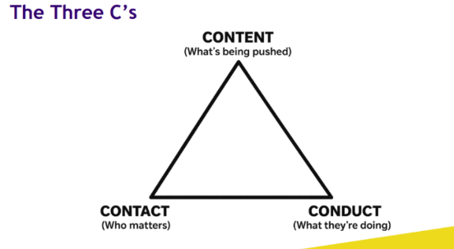
Algorithms are designed to maximise engagement and have control over what you see. From clicks, watch times to pauses. Young people are unfortunately fighting a technology system programmed to follow instruction. Algorithms prioritise polished content. Social belonging turned into a scoreboard.
However, impulse control and emotional regulation is still developing in adolescents. We can empower young people to reclaim control by active intervention:
-
Not to pause on harmful content.
-
Hide/mute or say ‘not interested’, removing from their feed.
-
Noticing what makes them feel good or bad and curate their content accordingly.
-
Discourage scrolling, just go to the profiles you like.
Teaching algorithmic literacy, so they can navigate with greater confidence and mitigate the risk and harmful content.
Asking: “What did you see today, and how did it make you feel?”
To know that social media is a place of social connection and we need to guide them through managing the types of content they see, and not be governed by algorithms. Help them to know it’s not them being weak, it’s how they use it.
Digital is just another lens on navigating life.
In our newsletter next month, Chrissy will share takeaways from keynote speaker: Jeanine Connor MBACP, MSc, MEd, BSc (Hons) and her talk:
Modern Life is rubbish… (or is it)?
All talks throughout the day were also a great insight into the pros and cons, helping us all to keep an open mind into the benefits and safety aspects – you can find an overview from the day here: